The integration trap - and how we're breaking the industry out of it
Summer's over. Inboxes are filling up, calendars are filling faster, and every IT and Facilities team I speak to is walking back into the same reality they left in July - an estate full of technology that only tells them something is wrong once a person complains.
So, before the autumn runs away with us, I want to talk about the single biggest reason that reality exists. It isn't the devices. It's the way the whole industry has been forced to connect them.
For decades, we bought more technology. Not more intelligence
Think about how the last twenty years actually went. Every new problem got solved by buying another point solution - another platform, another dashboard, another vendor portal. The estate grew. It never converged. Buildings became connected, but the technology inside them never became intelligent.
Every platform produces data. Very few share intelligence. And the industry quietly accepted that as normal.
The bottleneck nobody talks about: every vendor needs its own custom integration
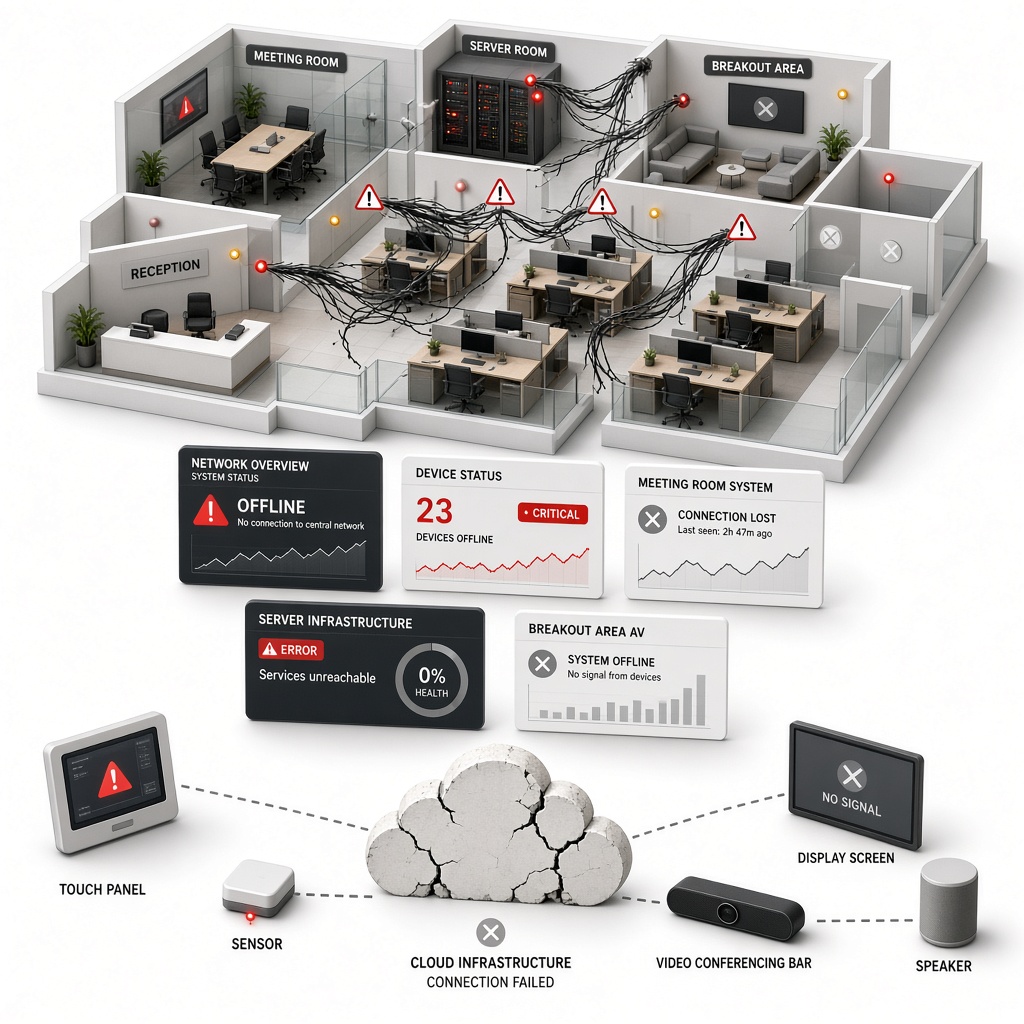
Here's the part that rarely gets said out loud. To monitor or manage any device, you first have to build a specific, custom integration to that exact vendor. Every brand speaks its own language, exposes its own API, runs its own cloud, guards its own portal. So visibility across a mixed estate isn't one job - it's dozens of separate ones, each built by hand.
And building it once is the easy part. Keeping it alive is the trap. Every software update can change the integration. Every API revision can break it. Every new security requirement or authentication change means going back and reworking it. Multiply that across every manufacturer in a real building and you get a maintenance treadmill that never stops - brittle connections, constant firefighting, and whole categories of devices that simply never get watched because integrating them was never worth the effort.
That is the structural bottleneck of our entire industry. Not a lack of tools - too many of them, each tied to one vendor, each demanding to be maintained forever. Custom integration, one brand at a time, does not scale. It was never going to.
We didn't set out to build a platform. We set out to end this
Morbit began in the world of collaboration - unified comms, video, meeting rooms. It's where we cut our teeth, and it taught us the thing that still drives everything we do: nobody actually wants a monitoring tool. They want the meeting to just work. They want to walk into a room and not lose the first ten minutes to a screen that won't wake up.
That's the shift the whole market is now living through. Customers have stopped buying features. They're buying results - work removed from their day, problems solved before they land, fewer reasons to send an engineer across the country to reboot a device. The simplest way to say it: technology should no longer create work. It should remove it.
But you can't deliver that on top of an integration model that creates work by design. So we set out to replace the model itself.
Our answer: a universal approach
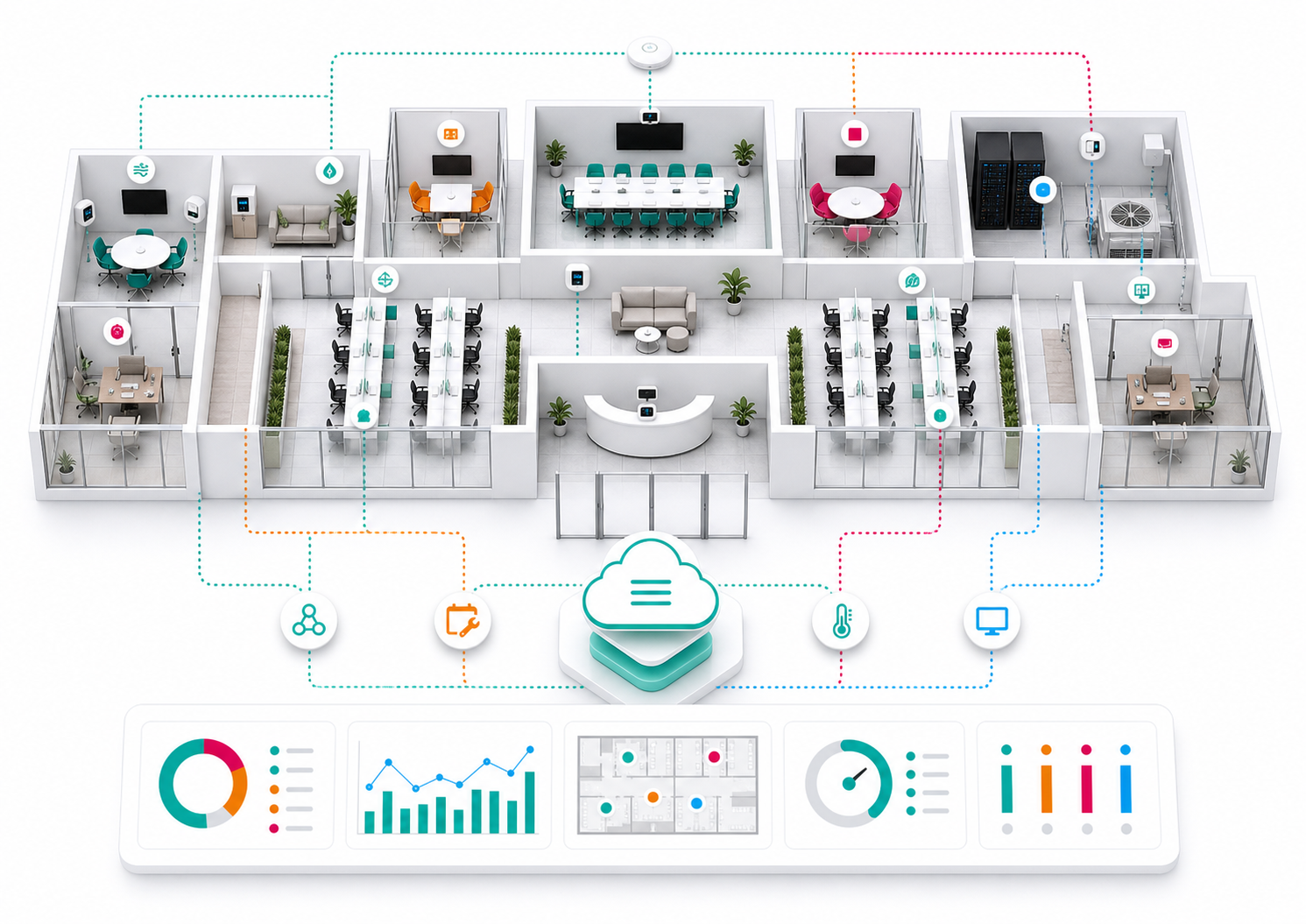
Instead of one bespoke, fragile integration per vendor - maintained forever, breaking with every update - Morbit takes a universal approach to the estate. Anything with an IP address, an accessible API, an on-premises or cloud connection can be brought in and made intelligent: known devices and unknown ones, the technology you own today and the technology you'll buy tomorrow.
It's a progression, not a switch. Identify every connected asset. Monitor what's really happening - not just "is it online?" but what's actually going on. Manage it remotely from one place instead of a dozen portals. And automate the response, so problems are handled before anyone notices. That's what we mean by Universal Device Management - and it's the engine the whole vision runs on. When a vendor ships an update or tightens security, the estate stays covered, because coverage no longer hangs on a hand-built connection to that one brand.
This is also why Morbit doesn't ask anyone to rip out what they already own. Your existing investments keep working - they just get smarter, and finally sit under one source of truth.
We're not a UC platform. We're not an AV platform
We're the intelligence layer for connected spaces - sitting at the intersection of device management, workplace experience and estate-wide monitoring, where no single tool has ever managed to stand. The market has been telling us, deal after deal, exactly what it wants built. We've been listening. And over the next few months you're going to see us build it faster than anyone expects.
If you manage technology across offices and you're tired of finding out about problems from the people you're meant to be helping - come and see what Morbit looks like now. Book a live demo and we'll walk you through your world, not a generic one.
We don't believe the future needs more dashboards.
We believe the future needs technology that removes work.