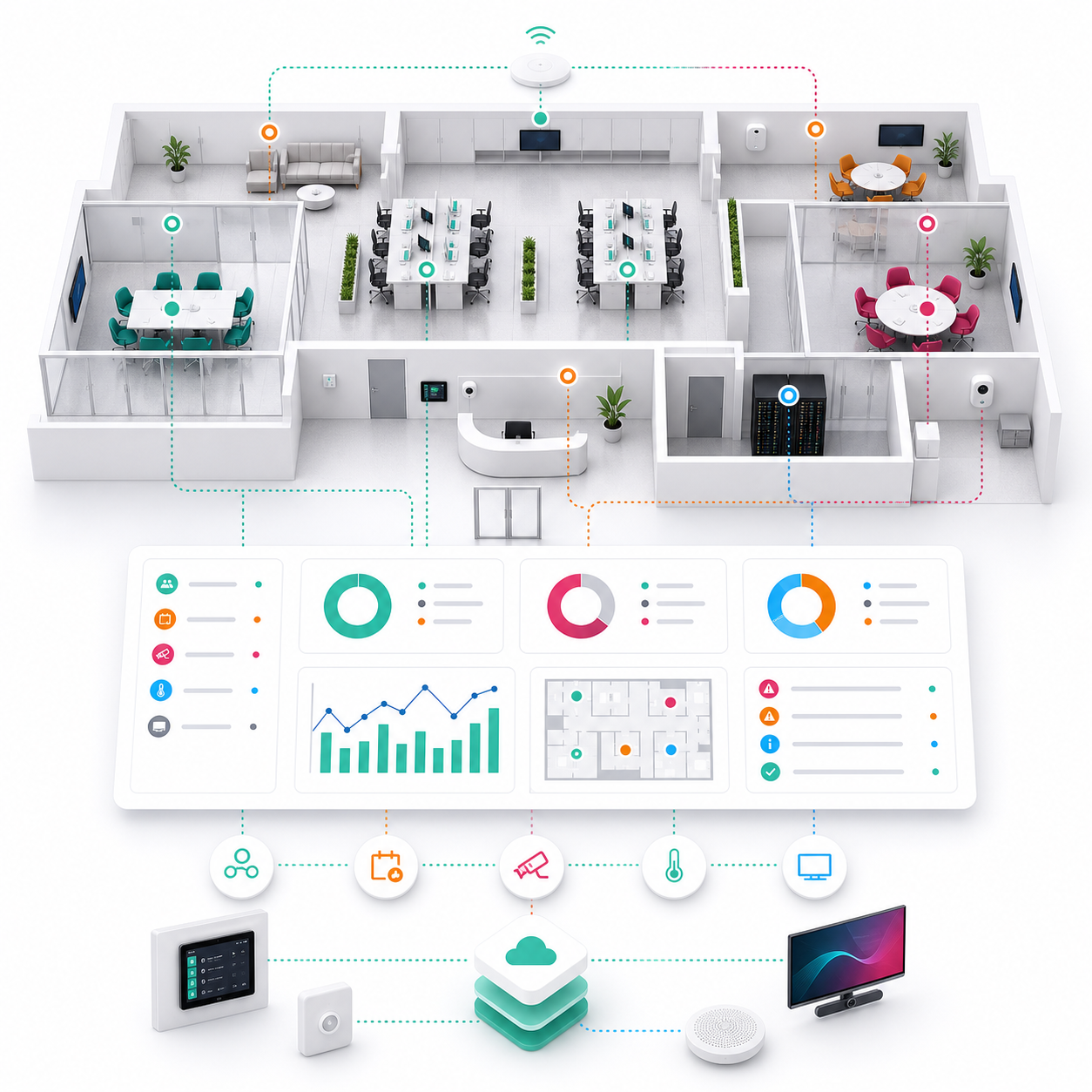
A room booked but never used isn't just an inconvenience. Multiply one empty 60-minute slot across a floor, a building, and a working week, and you're looking at a facilities management problem with real financial consequences — and most organisations have no idea how bad it is.
The Hidden Cost of Empty Rooms
Research consistently shows that between 30–40% of meeting room bookings result in no-shows. In a typical office building, that can mean hundreds of hours of bookable space sitting idle every week — space that is nevertheless marked as unavailable in the booking system.
The knock-on effects are significant:
- Real estate cost — you're paying for space that delivers zero value
- Employee frustration — staff can't find rooms, productivity drops, and confidence in the booking system erodes
- Misleading data — facilities decisions get made on booking data rather than actual occupancy, leading to over-investment in space or poorly targeted refurbishment
Booking Data Isn't Occupancy Data
This is a critical distinction. Calendar systems tell you what people *intended* to do. Occupancy sensors and meeting room monitoring tools tell you what *actually happened*.
Without real occupancy data, your utilisation reports are fiction.
How Auto-Release and Real Monitoring Fix It
Two practical interventions make an immediate difference:
- Auto-release — rooms are automatically freed if a meeting hasn't started within a defined window (typically 10–15 minutes). No-shows stop blocking space.
- Real occupancy monitoring — sensor or software-based tools confirm whether a room is genuinely in use, giving facilities teams accurate utilisation data to act on
Together, these approaches reduce wasted space, improve the employee experience, and give you a truthful picture of how your workplace is actually being used.
What Good Looks Like
Organisations that combine auto-release policies with real occupancy data typically see measurable improvements in room availability and a meaningful reduction in ghost bookings — without adding desk space or meeting rooms.
More importantly, their facilities decisions are based on evidence, not assumptions.
Take Control of Your Meeting Room Data
If your room booking data and your actual occupancy don't match, you're managing blind. Morbit gives facilities and IT teams the real-time visibility they need to understand how workplace space is genuinely being used — and to do something about it. Get in touch at morbit.co.uk to see it in action.