Environmental Sensors + Call Quality Data: A Smarter Way to Manage Meeting Rooms
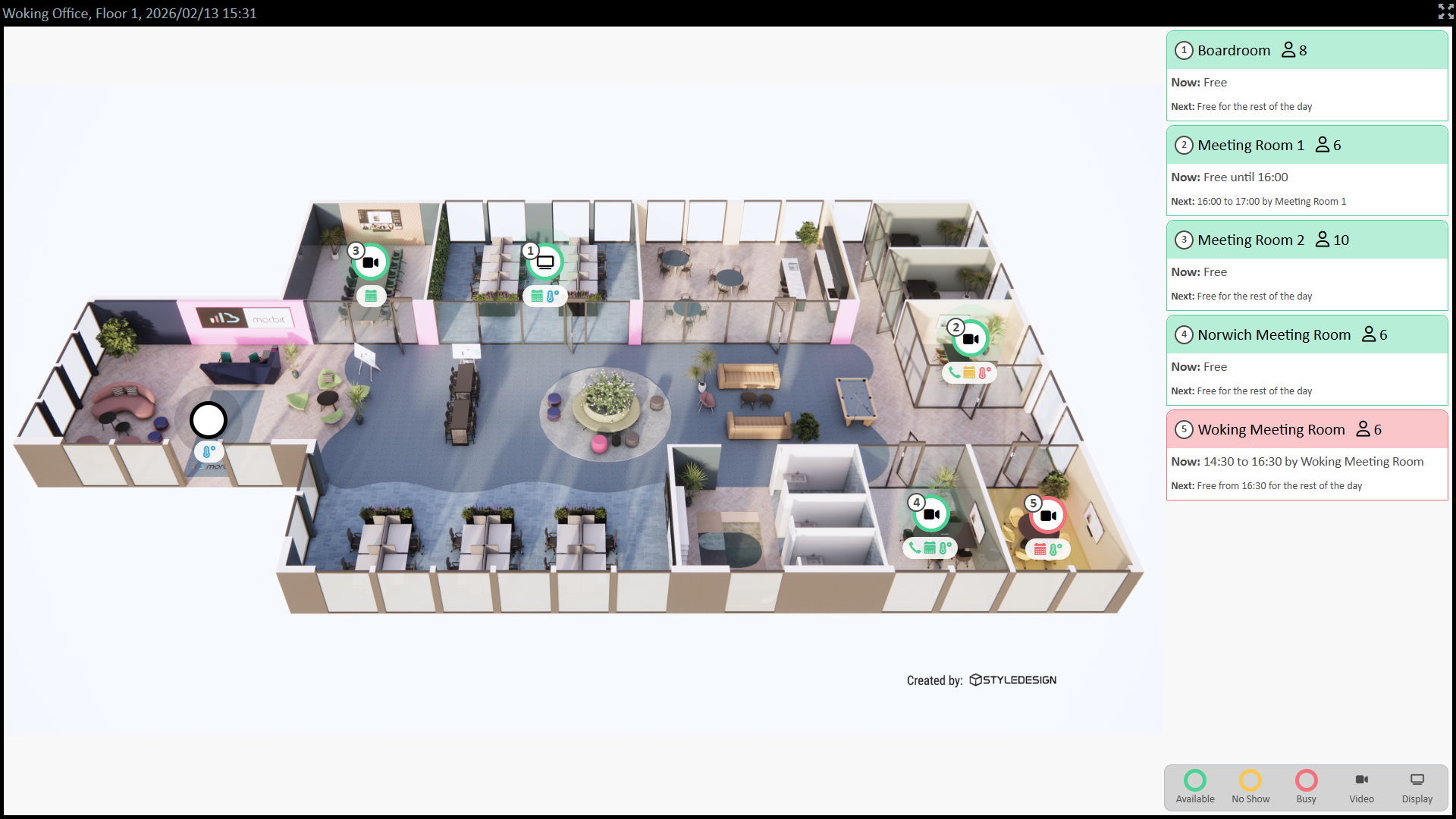
A meeting that sounds bad on Teams isn't always a network issue - it might be a room that's too hot, too crowded, or simply booked back-to-back without a break. Combining environmental sensor data with Teams call quality metrics gives facilities and IT teams the full picture, not just half of it.
Spot Over-Booked or Uncomfortable Rooms
Set CO₂ and temperature alerts to flag when a room is consistently over capacity or drifting outside a comfortable range. A spike in CO₂ during back-to-back bookings is a strong signal the room needs a cooldown period, not just better ventilation.
Correlate Environment With Call Quality
When users report poor audio or video, cross-reference the timestamp with sensor data. A pattern of degraded call quality alongside high temperature or CO₂ readings points to environmental causes, not network faults - saving IT hours of unnecessary troubleshooting.
Identify Recurring Patterns
Track sensor data by room and time of day. Is the corner office always uncomfortably warm during afternoon meetings? Recurring patterns like this make it easy to adjust HVAC schedules or booking policies proactively.
Optimise Hot-Desking and Justify Redesigns
Layer desk utilisation data on top of air quality readings to fine-tune hot-desking assignments. Over time, this combined dataset builds a solid, data-driven case for which spaces genuinely need investment - and which don't.
Get the Full Picture
Morbit brings Teams call quality and environmental monitoring together in one view, giving facilities and IT teams the visibility to make confident, evidence-based decisions. Get in touch to see it in action.